You’ve been wanting to learn an instrument. Maybe it’s the violin, or perhaps you’ve always been curious about Indian classical music. You find a teacher, pay money, and start practicing. But something feels missing.
After three months, you’re still confused about rhythm patterns. Your teacher explains “Tala,” but it feels like they’re speaking a foreign language. You watch YouTube videos, but none of them explain why rhythm matters or how to actually practice it correctly. Frustration sets in.
Here’s the truth: Most music students struggle not because they lack talent, but because they don’t understand the foundation—rhythm, breathing, and the why behind what they’re learning.
This is exactly what Manasukh Dhvani’s special Pakhawaj Workshop addresses. We’re not just teaching you an instrument. We’re teaching you the language of Indian classical music.
What is Pakhawaj? Understanding the Heart of Indian Rhythm
Before we dive into the workshop details, let’s understand what makes Pakhawaj so special.
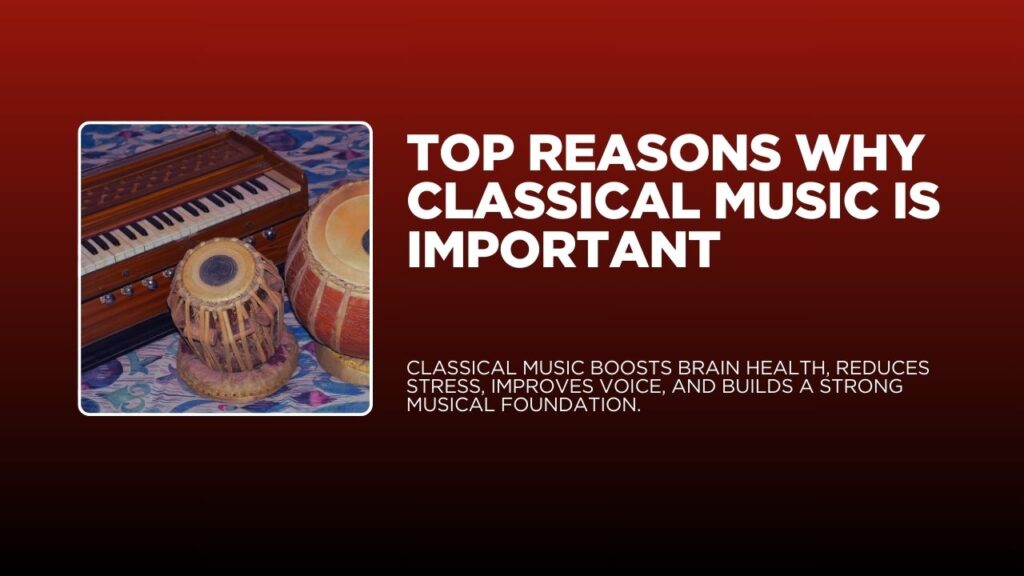
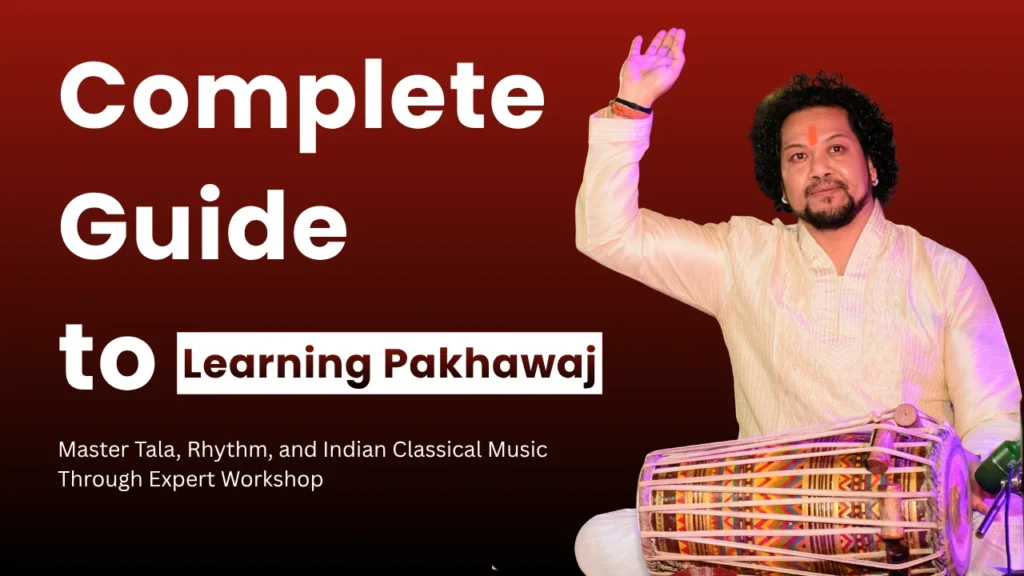
Pakhawaj (also spelled Pakawaj or Pakhraj) is a barrel-shaped, hand-played drum that sits at the very soul of Dhrupad, one of India’s oldest and most respected vocal traditions. Unlike tabla (which you might have heard in Bollywood music), Pakhawaj produces deeper, warmer tones and requires a different playing technique.
The word “Pakhawaj” comes from Persian origins and literally means “soft voiced” or “gentle sounding.” It’s been used for centuries to accompany classical singers and instrumentalists, creating the rhythmic foundation that allows melodies to truly shine.
Why Should You Care About Pakhawaj?
Here’s something most music teachers won’t tell you: Learning Pakhawaj teaches you discipline, mathematics, and meditation all at once.
When you play Pakhawaj, you’re not just hitting a drum randomly. Every stroke has a name (called a “Bol”). Every pattern follows logic. Every rhythm cycle connects to the ancient science of music that’s been refined for over 1,500 years.
Think of it like learning music’s version of coding—everything has a purpose, and when you understand the pattern, everything else becomes easier.
The Foundation: What is Tala in Indian Classical Music?
If you want to understand Pakhawaj, you must first understand Tala (also called “Taala”).
Tala is the rhythmic framework of Indian classical music. It’s like the heartbeat of a song. In Western music, we have “beats” and “measures.” In Indian classical music, we have Tala—a complete rhythmic cycle that repeats over and over.
How Does Tala Work?
Imagine a clock that ticks 8 times, then resets and ticks 8 times again. That’s one type of Tala called Tal Keharwa (8 beats).
Each beat is called a “Matra.” The first beat of the cycle is called the “Sam,” and musicians must return to this point with precision—even after 10 minutes of improvisation.
Here’s a simple breakdown:
| Tala Name | Number of Beats | Where It’s Used |
|---|---|---|
| Keharwa | 8 beats | Devotional songs, light classical |
| Tintal (Teental) | 16 beats | Khyal (vocal music), Instrumental solos |
| Rupak | 7 beats | Khayal, certain Bandishes |
| Jhapta | 10 beats | Khyal, Tabla solo performances |
| Ektaal | 12 beats | Khayal, Dhrupad accompaniment |
| Chautal | 12 beats | Dhrupad tradition |
| Dhamar | 14 beats | Dhamar (seasonal song form) |
Why This Matters: When you learn Pakhawaj, you’re learning the mathematics behind music. Research shows that students who understand Tala develop better memory retention and mathematical skills compared to those who learn casually.
Meet Nishant Singh: Your Pakhawaj Master
Nishant Singh is not just a Pakhawaj player—he’s a custodian of a 500-year-old tradition.
With decades of experience in the Dhrupad tradition and mentorship from renowned Pakhawaj artists, Nishant brings authenticity, passion, and practical knowledge to every lesson. At Manasukh Dhvani (meaning “sound of eternal bliss” in Sanskrit), he’s trained students from beginners to professional musicians.
What makes Nishant different? He bridges the ancient tradition with modern learning. He understands that today’s students need clear explanations, practical exercises, and a roadmap—not just abstract concepts.
The Workshop: A Complete Learning Journey in One Day
Dhvani Anubhav (which means “Musical Experience”) is not your typical workshop. It’s a complete immersion program designed to transform your understanding of rhythm and classical music.
Why A Single-Day Workshop Works
Research from music education studies shows that intensive workshops create deeper learning experiences than sporadic classes. Here’s why:
- Continuity of thought: You stay in the learning zone for the entire day
- Multiple reinforcement: Concepts are explained, demonstrated, discussed, and performed live
- Real-time interaction: You can ask questions immediately when confused
- Motivation surge: Being with other music enthusiasts creates inspiration
Part 1: Foundations of Pakhawaj & Tala (10:00 AM – 1:00 PM)
What You’ll Learn in Session 1
Duration: 3 hours
Focus: Building the foundation
The History Behind Your Fingers
Did you know that Pakhawaj has been played for over 500 years? Yet most people have never heard of it.
In this session, you’ll discover:
1. The Real Story of Pakhawaj
The Pakhawaj’s journey begins in the courts of medieval India, where it was the preferred percussion instrument for Dhrupad singers. While tabla became popular in Hindustani concert music during the 18th century, Pakhawaj remained the authentic heartbeat of the Dhrupad tradition.
Think of it this way: Tabla is like modern pop music, rhythmically complex but adaptable. Pakhawaj is like classical poetry—traditional, profound, and deeply meaningful.
2. Understanding Tala (Taala) from Scratch
Many people think Tala is just about counting beats. Wrong. Tala is about:
- Pattern recognition: Your brain recognizes cycles within cycles
- Time awareness: Developing an internal clock that’s accurate to milliseconds
- Improvisation within structure: Creating music that sounds free yet stays perfectly placed
Here’s how Tala works in practice:
Keharwa Tala (8 beats):
1 | 2 | 3 | 4 | 5 | 6 | 7 | 8 | [Cycle repeats]
^                       ^
Sam (home point)     Important point
When a singer improvises, they go away from these points but always return at exactly the right moment. This requires deep practice.
3. The Physics of Pakhawaj Sound
Every Bol (stroke) produces a different sound because:
- Different hand positions
- Different striking points on the drum
- Different pressure applied
The main Bols are:
| Bol | Sound | Hand Used | Position on Drum |
|---|---|---|---|
| Dha | Deep, full sound | Right | Center |
| Mridha | Similar to Dha | Right | Slightly off-center |
| Ga | Sharp, high sound | Left | Left side |
| Na | Medium sound | Right | Right side |
| Ki | Light, quick sound | Left | Left side edge |
| Jha | Resonant sound | Right | Center to right |
4. Building Your Riyaz (Practice) Foundation
You’ll learn why casual practice doesn’t work. Instead, you’ll understand:
- How much to practice daily (studies show 45 minutes of focused practice = 3 hours of casual practice)
- What to focus on first (rhythm accuracy before speed)
- How to track your progress (measurable milestones)
Interactive Demonstrations You’ll See
During this session, Nishant will:
- Play each Bol slowly while explaining the hand position
- Show common mistakes and how to correct them (a video played slowly helps the brain understand)
- Demonstrate rhythm cycles at different tempos (slow to fast)
- Perform a simple composition so you hear how all pieces fit together
Key Takeaway from Session 1: You’ll understand that Pakhawaj isn’t a percussion instrument to show off with—it’s a tool for musical precision and self-discipline.
Part 2: Advanced Concepts & Layakari Mastery (2:30 PM – 4:30 PM)
What Makes a Pakhawaj Player Go From “Good” to “Great”?
The answer is Layakari—the art of playing with different speeds while staying in rhythm.
Understanding Layakari (Laya Technique)
Layakari literally means “playing with different tempos.” It’s how musicians create excitement, show their skill, and demonstrate their understanding of rhythm.
In simple terms: Imagine a normal walking pace. Now imagine someone walks at double speed (Dugun), triple speed (Tigun), or quadruple speed (Chaugun)—all while walking in a straight line. That’s Layakari.
The Four Main Layakari Types
1. Dugun (Double Speed)
The player doubles the speed of the original rhythm while maintaining the same Tala cycle.
When to use: When you want to create excitement or show technical skill. A violin player or singer playing Dugun creates the feeling that the music is accelerating even if the actual tempo hasn’t changed.
2. Tigun (Triple Speed)
Three times the original speed, creating an even more intricate pattern.
When to use: To show off precision and control. When watching a professional Pakhawaj player, Tigun passages are where you truly see their years of practice.
3. Chaugun (Quadruple Speed)
Four times the speed. This is where Pakhawaj becomes almost unrecognizable as a drum—it sounds like a rapid conversation of percussion syllables.
When to use: The climax moment of a performance. The Pakhawaj player is saying, “I’ve mastered this, and here’s my proof.”
4. Aad (Acceleration)
Instead of jumping to double speed, you gradually accelerate from the original speed to a faster speed, then return back down.
5. Biyad (Bihad) – The Complex One
Playing patterns that don’t align with the underlying Tala, creating tension and complexity, then resolving back to the Tala.
This is the most advanced concept and separates student players from professional artists.
Performance Comparison: Layakari in Action
| Speed Type | Times Faster | Difficulty Level | Visual Appearance | When Used |
|---|---|---|---|---|
| Normal Tala | 1x | Beginner | Steady hand movements | Foundation, structure |
| Dugun | 2x | Intermediate | Hand movements noticeably faster | Building energy |
| Tigun | 3x | Advanced | Very fast hand movements | Showing skill |
| Chaugun | 4x | Expert | Blur of hand movements | Climactic moments |
| Aad | 1x to 2x+ gradually | Advanced | Speed gradually increases | Smooth transitions |
| Biyad | Variable | Expert | Complex, syncopated feel | Artistic expression |
The Gharana Connection: Musical Families and Styles
Did you know that in Indian classical music, there are different “styles” or “schools” of playing? These are called Gharanas.
A Gharana is like a musical family—a specific style passed down through generations, with its own characteristics, compositions, and techniques.
Famous Pakhawaj Gharanas
| Gharana | Characteristics | Known For | Influence |
|---|---|---|---|
| Benares (Varanasi) Gharana | Deep, resonant tones; complex patterns | Traditional Dhrupad accompaniment | The most “classical” approach |
| Darbhanga Gharana | Melodic approach; integration with singer | Supporting vocal music beautifully | Lyrical quality |
| Farrukhabad Gharana | Faster tempos; showmanship | Tabla-influenced techniques | More contemporary feel |
| Lucknow Gharana | Balanced approach; technical precision | General concerts and performances | Versatile style |
Why This Matters: Different Gharanas have different Bols, different composition styles, and different performance practices. Understanding your Gharana is like understanding your musical accent.
The Practice Roadmap: From Student to Performer
In Session 2, you’ll receive a structured learning roadmap that shows:
- Month 1-3: Building muscle memory and basic Bols
- Month 4-6: Learning simple compositions and Tala cycles
- Month 6-9: Introducing Dugun and basic Layakari
- Month 9-12: Developing speed and accuracy
- Year 2: Gharana study and performance preparation
- Year 3+: Advanced improvisation and artistic development
This roadmap is crucial because most music students quit within 6 months because they don’t know if they’re making progress. A clear roadmap prevents this.
Sangaat: The Art of Accompaniment
Sangaat means “playing together” or “accompanying.” This is the heart of Pakhawaj’s purpose.
A Pakhawaj player is not a soloist—they are a partner. The Pakhawaj player must:
- Listen carefully to the singer or instrumentalist
- Follow their improvisations while maintaining the Tala
- Support them at the right moments
- Enhance the music without overpowering it
Think of it like a dance partner—you both move independently, but you stay together, feel each other’s rhythm, and create something beautiful that’s larger than either one alone.
In this session, you’ll learn:
- How to stay focused on the main artist while playing
- How to adjust tempo without losing timing
- How to know when to stay simple and when to add complexity
- How to anticipate where the singer or instrumentalist is going
- How to bring them back to “Sam” (the home point) if they drift
Part 3: Live Performance Experience (5:30 PM Onwards)
Why Live Performance Matters in Learning
Theory without experience is incomplete. Reading about Layakari is different from hearing a master perform it.
In Part 3, you’ll experience:
1. Traditional Compositions in Action
You’ll hear complete Dhrupad Bandishes (compositions) with Pakhawaj accompaniment, showing how all the concepts come together in a real performance.
2. Layakari Demonstrations
Watching Nishant play Dugun, Tigun, and Chaugun in real-time, with no speed editing or tricks—just pure skill. Your brain absorbs more from live performance than from any explanation.
3. Accompaniment Techniques Live
You’ll see how a Pakhawaj player reacts to a singer’s improvisation, stays with them, and brings them back to the structure. This is something you can’t learn from a book.
4. Performance Psychology Insights
Nishant will share:
- How to manage nervousness before a performance
- How to recover if you miss a beat during live playing
- How professionals think during complex improvisations
- How the audience’s energy affects your playing
5. The Future of Pakhawaj
A honest discussion about:
- How Pakhawaj is evolving in the modern world
- Career opportunities for Pakhawaj players
- Fusion possibilities while maintaining tradition
- How to keep the tradition alive
Who Should Attend This Workshop?
Let’s be clear: this workshop is for specific people, not everyone.
You Should Attend If You:
✅ Are already learning Pakhawaj and want to deepen your understanding
✅ Play tabla or other percussion and want to understand Tala better
✅ Sing classical music and want to understand rhythm structure
✅ Play any classical instrument (violin, sitar, flute, etc.) and want to accompany singers
✅ Love Indian classical music and want to understand its foundation
✅ Are considering learning Pakhawaj and want to know if it’s right for you
✅ Are a music teacher and want to improve how you teach rhythm concepts
✅ Are studying Indian classical music theory and need practical understanding
✅ Want to develop better rhythm sense and timing for any musical pursuit
✅ Are interested in Indian culture and philosophy as expressed through music
You Might Want to Skip If:
❌ You’re looking for a casual, entertainment-focused workshop
❌ You expect to become proficient in Pakhawaj in one day (this is an intensive introduction and deepening, not a course)
❌ You’re only interested in Bollywood or film music (Pakhawaj is for classical music)
❌ You have no interest in learning or practicing music
What You’ll Actually Take Away (Realistic Expectations)
Here’s what happens after the workshop:
Immediate Knowledge (After Day 1)
- You’ll understand what Tala really is, not just “counting beats”
- You’ll know the names and sounds of basic Pakhawaj Bols
- You’ll understand why rhythm is the foundation of all music
- You’ll know how Layakari works and why it matters
- You’ll have a practice roadmap for your next 12 months
- You’ll understand your own learning process better
Medium-term Results (After 1-3 Months of Practice)
If you practice 30-45 minutes daily:
- You’ll start recognizing Tala cycles in any music you hear
- Your hand coordination will improve noticeably
- You’ll be able to play simple Bols with correct technique
- Other musicians will notice your improved rhythm sense
- You’ll feel more confident about your musical direction
Long-term Results (After 6-12 Months of Consistent Practice)
- You’ll have a solid foundation that prepares you for advanced learning
- You could start accompanying singers in simple situations
- Your musical understanding deepens significantly
- You develop patience, discipline, and focus (skills that transfer to life)
- You become part of a musical tradition that’s 500+ years old
The Manasukh Dhvani Approach: Online and In-Person Learning
At Manasukh Dhvani, located in Pulchowk, Lalitpur, Nepal, we offer:
Online Classes
✅ 1-on-1 private lessons (vocal, instrumental, drums, tabla, violin)
✅ Flexible scheduling from anywhere in the world
✅ Personal attention from experienced musicians
✅ Progress tracking and personalized roadmaps
In-Person Classes (Pulchowk, Lalitpur)
✅ Private lessons with face-to-face instruction
✅ Group workshops and classes
✅ Access to multiple instruments for learning
✅ Community of music learners
Why This Hybrid Model Works:
Research shows that music students learn fastest with a combination of structured theory, personal feedback, and community involvement. Our hybrid approach provides all three.
Pakhawaj Learning Path: What to Expect Beyond This Workshop
After attending the workshop, here’s how your learning journey might unfold:
Phase 1: Foundation (Months 1-3)
Focus: Building muscle memory and basic technique
- Learning the correct hand positions (left hand vs. right hand has different roles)
- Mastering basic Bols: Dha, Ge, Na, Tom, Ka, Jha, Nu
- Understanding Keharwa Tala (8-beat cycle)
- Daily practice: 30-45 minutes
- Expected progress: Smooth, confident basic Bols
Manasukh Dhvani Online Classes: Weekly 1-on-1 sessions to correct technique, answer questions, and guide practice
Phase 2: Structure (Months 4-6)
Focus: Learning compositions and multiple Tala cycles
- Learning a Dhrupad Bandish (composition)
- Understanding Tintal (16-beat cycle) and Rupak Tala (7-beat cycle)
- Introduction to Dugun (double speed)
- Daily practice: 45-60 minutes
- Expected progress: Playing complete Tala cycles with compositions
Phase 3: Advancement (Months 7-12)
Focus: Speed, accuracy, and Layakari
- Mastering Dugun and introduction to Tigun
- Learning accompaniment techniques
- Understanding your Gharana style
- Daily practice: 60-90 minutes
- Expected progress: Playing with confidence, accompanying singers in simple songs
Phase 4: Mastery (Year 2+)
Focus: Artistic expression and professional development
- Advanced Layakari and Biyad
- Complex Bandishes and Raag accompaniment
- Performance experience
- Mentoring others
FAQ: Questions About the Pakhawaj Workshop
Q: Do I need to be a musician to attend?
A: No, but it helps. If you have no musical background, you should know that Pakhawaj is specifically for classical music traditions, not Bollywood or casual pop music. Come with an open mind and a willingness to learn.
Q: Is Pakhawaj harder than Tabla?
A: Different, not harder. Tabla requires learning many different strokes and has more complex solo traditions. Pakhawaj requires deeper listening and understanding of Tala. Choose based on your interest, not difficulty.
Q: Will I be able to play after this workshop?
A: You’ll understand the basic concepts and hear how it sounds. Playing well requires daily practice. The workshop is the beginning of your journey, not the end.
Q: Can I attend if I’ve never heard of Pakhawaj?
A: Yes. In fact, the first session is designed for people meeting Pakhawaj for the first time. Come curious, and you’ll leave educated.
Q: How is this different from watching YouTube videos?
A: Three key differences:
- Personalized Interaction: You can ask questions and get immediate answers tailored to your situation
- Live Demonstration: Watching a master perform live creates muscle memory and understanding that videos can’t replicate
- Comprehensive Structure: Rather than random YouTube videos, this workshop follows a logical progression from foundation to performance
- Roadmap: You’ll leave with a clear path forward, not wondering what to learn next
Q: I’m not in Nepal. Can I attend online?
A: This specific workshop is in-person in Pulchowk, Lalitpur. However, Manasukh Dhvani offers online classes globally. Contact us at manasukhdhvani@gmail.com for online learning options.
The Real Value Proposition
Let’s be honest: there are many ways to learn music. You could:
- Find YouTube tutorials (Free but disorganized, no personalized feedback)
- Learn from a local teacher (Good if you find an excellent teacher, but rare)
- Buy online courses (Structured but impersonal, no real-time interaction)
- Attend workshops like this one (Investment in your learning, guided by expertise)
What makes this workshop different?
✓ Taught by an experienced Pakhawaj artist, not a keyboard player trying to explain percussion
✓ Combines theory, demonstration, and live performance, engaging multiple learning styles
✓ Provides a roadmap beyond the workshop, so you know what to do next
✓ Creates community, connecting you with other music learners
✓ Honors tradition while acknowledging modern learning needs
✓ Reasonably priced for a full-day intensive with a master musician
How to Get Started: Your Next Steps
If this workshop resonates with you, here’s what to do:
Step 1: Register Your Interest
Email manasukhdhvani@gmail.com with:
- Your name
- Your musical background (or “no background”)
- Why you’re interested in Pakhawaj
- Any questions you want answered before committing
Step 2: Confirm Workshop Details
We’ll send you:
- Exact date and time (usually weekend workshops)
- Venue details in Pulchowk, Lalitpur
- What to bring (comfortable clothes, water bottle)
- Pre-workshop preparation (if any)
Step 3: Take Advantage of the Free Demo Class
Before committing to anything, we offer a free 30-minute demo class where you can:
- Meet Nishant Singh
- Ask your questions
- Get a feel for the teaching style
- Understand if Pakhawaj is right for you
- No pressure, no sales pitch—just genuine sharing of knowledge
Book your free demo class here: manasukhdhvani@gmail.com
Step 4: Attend the Workshop
Come with:
- An open mind
- Willingness to participate in discussions
- Notebook (you’ll want to write things down)
- Comfortable clothes and shoes
- Water bottle
- Phone silenced during sessions
Step 5: Continue Your Learning
After the workshop, continue with:
- Regular practice (the most important part)
- 1-on-1 guidance from Manasukh Dhvani (online or in-person)
- Weekly lessons to maintain momentum
- Community performances (when you’re ready)
Why Indian Classical Music Matters in Today’s World
In a world of instant gratification and surface-level entertainment, learning an instrument like Pakhawaj is an act of rebellion.
It says: “I value depth. I want to understand something completely. I’m willing to invest time and effort in mastery.”
Studies show that classical music students develop:
- Better focus and concentration (from sustained practice)
- Improved memory (from learning complex Tala cycles)
- Emotional regulation (from the meditative aspects of music)
- Patience and persistence (from facing challenges and overcoming them)
- Cultural connection (to a tradition older than most world religions)
When you learn Pakhawaj, you’re not just learning an instrument. You’re accessing 500 years of accumulated knowledge, philosophy, and spiritual practice.
The Manasukh Dhvani Philosophy
Manasukh means “joy of the mind” or “eternal bliss.”
That’s what we’re after not creating professional musicians (though that happens), but creating people who experience the joy and peace that comes from deep musical learning.
Our commitment to you:
✓ Authentic teaching rooted in tradition
✓ Clear explanations suitable for modern learners
✓ Personal attention and customized guidance
✓ A learning environment free of judgment
✓ Community and shared passion for music
✓ Ongoing support beyond any single workshop
Final Thoughts: Why You Should Consider This
If you’ve read this far, you’re probably genuinely interested in music, rhythm, and perhaps Indian classical traditions.
Here’s what we know about people like you:
- You don’t just want entertainment; you want understanding
- You’re willing to invest time in something meaningful
- You value expertise and want to learn from experienced teachers
- You’re open to traditions that might seem unfamiliar
- You’re looking for something deeper than casual hobbies
This workshop is designed exactly for that kind of person.
Ready to Begin Your Journey?
The first step is always the simplest: reach out.
✉️ Email: manasukhdhvani@gmail.com
🌐 Website: https://dhvani.manasukh.com/
📍 Location: Pulchowk, Lalitpur, Nepal
Tell us:
- You’re interested in learning Pakhawaj
- Ask about the workshop dates
- Request your free 30-minute demo class
- Share your musical background (or lack thereof)
No obligations. No high-pressure sales. Just music lovers helping other music lovers find their path.
More Resources to Explore
Understanding Indian Classical Music Better
- Raag: The Soul of Indian Classical Music – Understanding how melody structures work in Indian music
- The Science of Rhythm – Why certain rhythmic patterns feel satisfying
- Gharana Traditions – The family lineages that preserve musical knowledge
- Meditation Through Music – The spiritual dimensions of classical music practice
References and Research
- The Dhrupad Tradition – A detailed study of Pakhawaj’s primary companion tradition
- Indian Percussion Instruments – Comparative study of drums in Indian music
- Tala Studies in Indian Classical Music – Academic research on rhythm cycles
- The Neuroscience of Musical Learning – How the brain develops through music practice
For more information on Pakhawaj learning, traditional instruments, or Indian classical music education, visit: https://dhvani.manasukh.com/
One Final Thought
Music education researcher Lucy Green found that students learn music best when they understand the “why” behind what they’re learning, not just the “how.”
That’s what this workshop provides: the “why” of rhythm, the “why” of Pakhawaj, the “why” of classical music traditions, and the “why” of disciplined practice.
From there, the path becomes clear.
ॐ नादब्रह्मणे नमः — “The cosmic sound is my teacher.”
May your musical journey be filled with joy, growth, and the deep satisfaction of mastering something beautiful.
See you at Dhvani Anubhav.
Manasukh Dhvani – A Music School in Pulchowk, Lalitpur, Nepal
Online Classes Available Worldwide
Email: manasukhdhvani@gmail.com
Website: https://dhvani.manasukh.com/