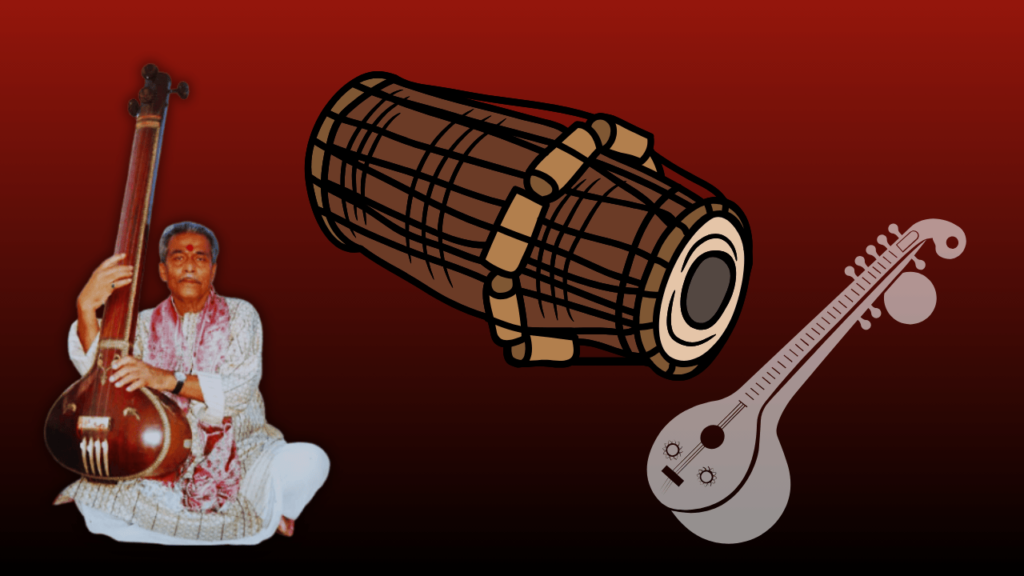
Have you ever heard a song so powerful it could start a fire? Imagine sitting in class, and your teacher sings a special song that makes the lamps light up without anyone touching them. Sounds like magic, right? Well, Raag Deepak is that magical song in Indian classical music, and yes, it’s real.
Raag Deepak (also spelled as Raga Dipak) is one of the most legendary ragas in Indian classical music. The name “Deepak” means “lamp” or “fire” in Hindi. This raga is famous for a very special reason – ancient stories say that when great musicians sang it perfectly, lamps would light up by themselves, and the whole room would become hot.

| Raag Detail | Information |
|---|---|
| Name | Raag Deepak (Dīpak) |
| Meaning | Lamp, Fire, Light |
| Classification | One of six main male ragas (Purush Raag) |
| Time | Evening (Sandhya Prahar) |
| Status | Rare/Lost Raga |
| Famous For | Fire-bringing powers in legend |
The Six Great Male Ragas
In old Indian music books, teachers talked about six main ragas called “Purush Ragas” (male ragas). Raag Deepak is one of these six special ragas. The six Purush Ragas are:
- Raag Bhairav
- Raag Malkauns
- Raag Hindol
- Raag Shree
- Raag Deepak
- Raag Megh Malhar
The Legendary Story of Tansen and Raag Deepak
The Challenge in Emperor Akbar’s Court
Raag Deepak became super famous because of Tansen, who was the greatest singer in India during the 1500s. He was so talented that Emperor Akbar made him one of his “Nine Jewels” – the nine most special people in his kingdom.
But not everyone was happy about Tansen’s success. Other singers in the court became jealous. They wanted to embarrass Tansen, so they came up with a tricky plan. They told Emperor Akbar, “Your Majesty, Tansen can sing so beautifully that he can light lamps just with his voice. He should sing Raag Deepak to prove it!”
The Dangerous Performance
Emperor Akbar was excited and asked Tansen to perform. But Tansen knew this was dangerous. He told the Emperor, “This raga is very powerful. When I sing it, the temperature will rise so high that I might get burned!”
But the Emperor insisted, so Tansen had no choice. He had to sing Raag Deepak knowing the consequences of it.
The Magical Performance
The day arrived. The emperor’s palace had hundreds of unlit oil lamps everywhere. Tansen started singing Raag Deepak. As he sang, something amazing happened:
- The temperature in the room started rising
- People began sweating
- Things started getting hot
- Then suddenly – one by one, all the lamps lit up by themselves!
- Tansen’s body temperature rose so high he developed a burning fever
Tansen ran outside, feeling like he was on fire. Later he got healed by the brilliant Raag Called Raag Malhar sung by the Tana Rini who were twin sisters at the temple in the Gujrat.
Is it myth or Real. Do check it out here
The Musical Structure of Raag Deepak
Now, let’s Know about how Raag Deepak is actually built. This is important for anyone learning Indian classical music!
Understanding the Notes (Swara Structure)
Raag Deepak is special because it exists in different forms. Think of it like having three different recipes for the same dish! Musicians have identified three main types:
- Poorvi Thaat (most common today)
- Bilawal Thaat
- Khamaj Thaat
Raag Deepak in Poorvi Thaat
This is the version most musicians sing today. Here are its details:
Aroha (Ascending Notes): S G M’ P d N S’
- This means: Sa, Ga, tivra Ma (sharp fourth), Pa, komal Dha (flat sixth), Ni, upper Sa
- Notice: Rishabh (Re) is missing when going up!
Avaroha (Descending Notes): S’ d P M’ G r S
- When coming down, Nishad (Ni) is missing!
| Musical Term | Details |
|---|---|
| Thaat | Poorvi |
| Jati | Shadav-Shadav (6 notes ascending, 6 notes descending) |
| Vadi Swara | Shadja (Sa) |
| Samvadi Swara | Pancham (Pa) |
| Varjit Swara | Rishabh in Aroha, Nishad in Avaroha |
| Komal Swara | Rishabh (flat Re), Dhaivat (flat Dha) |
| Tivra Swara | Madhyam (sharp Ma) |
| Time | Evening (5 PM – 7 PM) |
| Rasa (Mood) | Powerful, intense, devotional |
Why Different Versions Exist?
Here’s something interesting – the original Raag Deepak that Tansen sang might be lost! After Tansen died, nobody knew exactly which notes he used. So musicians tried to recreate it based on old descriptions, creating different versions. It’s like trying to remake your grandmother’s special recipe without having the exact measurements. Raag Deepak based on poorvi that is most coomonly used.
The Science Behind Raag Deepak: Can Music Really Create Fire?
Understanding Sound and Fire
Scientists have discovered that sound can actually affect fire! Here’s how it works:
- Sound is Vibration: When you sing or play music, you create sound waves. Sound waves are invisible vibrations in the air.
- Fire Needs Three Things:
- Fuel (like oil or wax)
- Oxygen (from air)
- Heat (to start burning)
- How Sound Affects Fire: Sound waves can push air molecules. When powerful sound waves hit a flame, they can:
- Shake the flame
- Push oxygen away from the fuel
- Create pressure changes
- Make flames flicker or dance
Modern Research on Sound and Fire
Scientists have actually tested this! In recent research, they found:
- Low-frequency sounds (30-60 Hz) can extinguish flames
- Acoustic resonance (when sound matches the natural vibration frequency of something) can create strong effects
- Sound waves between 14-21 Hz are most effective at affecting flames
- Bass sounds work better than high-pitched sounds
| Research Finding | Details | Source |
|---|---|---|
| Effective Frequency Range | 30-60 Hz for maximum flame impact | George Mason University Study |
| Acoustic Streaming | Sound creates air movement that separates oxygen from flame | Multiple Physics Studies |
| Resonance Effect | Matching natural frequencies amplifies the effect | Lawrence Berkeley Laboratory |
| Distance Achieved | Flames extinguished from 1.2-1.9 meters away | Recent Acoustic Research |
Could Tansen Really Light Lamps?
Now here’s the fascinating part. While modern science can extinguish flames with sound, lighting them is much harder. However, consider these possibilities:
- Acoustic Resonance Theory: If Tansen’s voice hit the exact resonant frequency of the oil in the lamps, it could create vibrations that generated heat through friction.
- Pre-heated Environment: The lamps might have been nearly ready to light (with hot wicks), and the acoustic pressure could have provided the final push.
- Psychological and Physiological Effects: The intensity of the performance could have created such heat in the room (from body heat, excitement, and air circulation) that spontaneous combustion became possible.
- Lost Ancient Knowledge: Ancient Indian musicians might have known specific frequency combinations we’ve lost, similar to how some ancient architectural acoustics remain mysterious today.
The Energy of Raag Deepak
Musicians who have performed Raag Deepak report unusual sensations:
- Increased body temperature during performance
- Intense concentration and energy
- A feeling of heat building up
- Unusual vibrations in the vocal cords
One famous musician, Pandit Dinkar Kaikini, even joked before his performance: “This raga will generate a lot of heat!” He sang it successfully and lived to tell the tale, proving it’s possible to perform safely with proper training.
Why is Raag Deepak So Rare Today?
We might wonder, “If this raga is so amazing, why don’t we hear it more often?” There are several reasons:
1. The Fear Factor
Many musicians are scared to perform Raag Deepak because of the legends. They worry something bad might happen to them. It’s like being afraid to enter a haunted house – even if ghosts might not be real, the fear is!
2. The Lost Tradition
After Tansen’s time, very few students learned this raga. Teachers became reluctant to teach it. Over 400+ years, the exact way to sing it was forgotten. Think of it like a game of telephone – the message changes as it passes from person to person.
3. Technical Difficulty
Raag Deepak requires:
- Exceptional breath control
- Precise pitch accuracy
- Strong voice projection
- Deep understanding of microtones (small changes in pitch)
- Years of practice
| Challenges | Why It’s Difficult |
|---|---|
| Breath Control | Long sustained notes require exceptional lung capacity |
| Microtones | Subtle pitch variations must be exact |
| Emotional Intensity | Performer must convey powerful energy |
| Rare Compositions | Few bandishes (compositions) exist |
| Limited Guidance | Few living teachers know the authentic form |
4. Few Compositions Available
Most ragas have hundreds of songs (bandishes) that musicians can learn. But Raag Deepak has very few. But the raag sung by the Vidhur mallik and ram chatur mallik through different thaats has a energy of the raag Deepak presented in it.
Different Musical Angles of Raag Deepak
One fascinating thing about Raag Deepak is that it appears in different musical families (thaats). Let’s understand this better:
1. Poorvi Ang Deepak
This is the evening version with serious, devotional mood. It uses:
- Komal Rishabh (flat Re)
- Tivra Madhyam (sharp Ma)
- Komal Dhaivat (flat Dha)
The Poorvi ang gives it a mysterious, sunset-like quality – perfect for evening time when the world transitions from day to night.
2. Bilawal Ang Deepak
This version uses mostly natural notes (shuddh swaras). It has a brighter, more straightforward character. Some musicians prefer this version because it’s easier to manage and has less emotional intensity.
3. Khamaj Ang Deepak
This rare version has a slightly playful touch despite the serious nature of the raga. The famous Pandit Dinkar Kaikini was known for his brilliant rendition in the Khamaj style.
What Great Musicians Say About Raag Deepak
Let’s hear from the experts who have studied or performed this mysterious raga:
Pandit Pran Nath (Kirana Gharana)
He made a very important observation:
“Despite the fact that Raga Deepak is listed as one of the six major ragas by all scholars, there is no written or oral evidence of anyone having sung or performed this raga after the time of Akbar’s legendary court musician, Mian Tansen. The accurate knowledge and art of performing this raga has been literally lost since that time.”
Pt Vidhur Mallik( Darbhanga Gharana)
Ram Chatur Mallick (Darbhanga Dhrupad Tradition)
This master explained that most musicians avoid performing Raag Deepak. He created his own interpretation using elements of Jod ragas using bilawal thaat. He taught that the raga should be performed with:
- Deep reverence
- Careful attention to komal (flat) and shuddh (natural) Nishad variations
- Slow, deliberate development
Ghulam Mustafa Khan (Rampur-Sahaswan Gharana)
This legendary vocalist sang Deepak in the Purvi thaat style. His interpretation focuses on:
- Evening atmosphere
- Devotional intensity
- Careful exploration of flat and sharp notes
The Energy and Mood of Raag Deepak
The Rasa (Emotional Essence)
Raag Deepak creates several powerful feelings:
- Veer Rasa (Bravery): Like a warrior preparing for battle
- Bhakti Rasa (Devotion): Deep spiritual connection
- Raudra Rasa (Fury): Controlled powerful energy
- Adbhuta Rasa (Wonder): Amazement at the power of music
How It Feels in the Body
Musicians and listeners report these physical sensations:
- Warmth spreading through the chest
- Increased heart rate
- Tingling in the spine
- Energized feeling
- Heightened alertness
- Sometimes, actual sweating!
The Visual Imagery
When performing Raag Deepak, musicians often visualize:
- Flickering oil lamps in an ancient temple
- The last rays of the setting sun
- Fire ceremonies (havan) with rising flames
- The glow of twilight
- Inner spiritual fire awakening
Research and Modern Studies on Raag Deepak
Modern musicians and researchers continue to explore this fascinating raga. Here’s what recent studies have found:
Acoustic Analysis
Researchers using modern technology have discovered:
- The raga uses specific frequency ranges that align with acoustic resonance
- Certain note combinations create standing waves in enclosed spaces
- The flat and sharp note combinations produce unique harmonic overtones
Psychological Studies
Scientists studying the effect of different ragas on listeners found:
- Raag Deepak recordings increase alertness and energy
- Heart rate and body temperature show measurable increases
- Brain activity patterns show heightened focus and concentration
- Listeners report feelings of warmth and energy
Comparison with Other Ragas
| Raga | Effect | Temperature Impact | Time |
|---|---|---|---|
| Raag Deepak | Heating, energizing | Increase | Evening |
| Raag Malhar | Cooling, calming | Decrease | Monsoon/Any |
| Raag Bhairav | Awakening, serious | Neutral | Morning |
| Raag Darbari | Calming, night-like | Slight decrease | Night |
Practical Tips for Understanding Raag Deepak
Want to experience this raga yourself? Here are some simple ways:
For Listeners
- Find Recordings: Search for performances by Ghulam Mustafa Khan, Ram Chatur Mallick, or KG Ginde
- Listen in Evening: Play the raga between 6-7 PM for authentic experience
- Notice Your Feelings: Pay attention to how your body responds
- Compare Versions: Listen to different artists to understand variations
- Study with Context: Read about Tansen and historical context while listening
For Students
- Start with Theory: Learn the notes on paper first
- Practice Components: Master each phrase separately
- Record Yourself: Listen back to check accuracy
- Slow Practice: Don’t rush – speed comes with time
- Respect the Raga: Always approach with proper mental attitude
The Connection Between Music and Nature
One beautiful aspect of Indian classical music is how ragas connect to nature. Raag Deepak represents the element of fire (Agni).
The Five Elements in Ragas
Ancient Indian philosophy talks about five elements (Pancha Bhutas):
- Prithvi (Earth): Represented by grounding ragas like Bhairav
- Jal (Water): Represented by Malhar family ragas
- Agni (Fire): Raag Deepak is the primary representation
- Vayu (Air): Represented by lighter ragas like Bhupali
- Akash (Space): Represented by expansive ragas like Puriya Dhanashri
Conclusion: The Living Legacy of Raag Deepak
Raag Deepak remains one of the most mysterious and powerful ragas in Indian classical music. Whether or not you believe that Tansen could light lamps with his voice, one thing is certain – this raga carries incredible energy and requires tremendous skill.
For music students, Raag Deepak represents:
- The pinnacle of vocal control
- The deep connection between science and music
- The importance of traditional knowledge
- The courage to explore challenging musical territories
Key Takeaways
✓ Raag Deepak is one of six main male ragas in Indian classical music
✓ It’s famous for the legend of Tansen lighting lamps in Emperor Akbar’s court
✓ Modern science shows sound can indeed affect fire through acoustic resonance
✓ The raga exists in multiple forms (Poorvi, Bilawal, Khamaj)
✓ It’s rarely performed today due to its difficulty and mysterious reputation
✓ Proper training and supervision are essential for learning this powerful raga