You’ve done Swayambhunath. You’ve climbed the steps, dodged the monkeys, and taken the photo everyone takes. You’ve walked Durbar Square, eaten your momo, bargained in Thamel, and maybe even watched the sunrise from Nagarkot. It was beautiful. But if you’re honest, somewhere around day three, a quiet thought crept in: “I’ve seen a lot of Kathmandu. But have I actually felt it?”
That feeling isn’t unusual. Most travel blogs will tell you the “authentic” experience is hiding in a hidden alley or a lesser-known temple. But there’s a form of authenticity that’s even rarer, and it’s not hidden in stone. It’s in sound. It’s called Dhrupad, one of the oldest surviving musical traditions in the world, and a small but growing number of travelers are now seeking it out during their time in Kathmandu, not as a performance to watch, but as an experience to sit inside of.
Kathmandu’s Tourist Trail Is Beautiful, But It Repeats Itself
Here’s something worth admitting: Kathmandu’s major sights, Boudhanath, Pashupatinath, Swayambhunath, Patan Durbar Square, are genuinely stunning. They deserve their place on every itinerary. But by 2026, they also share a common problem: they’re the same stops every traveler makes, at the same hours, with the same crowds, the same photo angles, and often, the same rushed 20-minute “guided experience” before the group moves on to the next stupa.
Nepal’s tourism economy has grown into the hundreds of millions of dollars, and with that growth comes something every seasoned traveler quietly notices: commercialization. Vendors calling out the same lines. Guides reciting the same facts. A feeling of watching a culture from outside a glass wall instead of stepping through it.
This isn’t a complaint about Kathmandu. It’s a completely normal stage every traveler reaches: the point where you stop wanting to see a culture, and start wanting to sit inside it for an hour.
That’s exactly the gap Dhrupad fills.
What Is Dhrupad, and Why Should a Traveler Even Care?
Dhrupad is the oldest surviving style of North Indian classical singing, built on long, slow, meditative vocal improvisation over a single sustained drone (the tanpura), with no rush, no flashy ornamentation, and no crowd-pleasing tricks. It developed from ancient Vedic chanting traditions and was later refined into a structured art form in royal courts around 500 years ago. Musicians describe it less as “performing” and more as a form of meditation you can hear.
Here’s why that actually matters to you as a traveler, even if you’ve never heard a raga in your life:
- It’s slow, on purpose. After a week of rushing between sights, a 45-minute Dhrupad session forces your nervous system to downshift. Many first-timers describe it as feeling like a 2-hour meditation session compressed into 20 minutes.
- It’s not a show, it’s a shared space. You’re not watching a stage performance from row 40. You typically sit on the floor, a few feet from the musician, sometimes with a cup of tea, and the sound genuinely moves through the room, not at you.
- It connects directly to what you’re already exploring. If you’ve stood inside Pashupatinath or Boudhanath and felt something you can’t quite name, that “something” is closely related to why Dhrupad exists: sound used as a spiritual practice, not entertainment.
- You’ll remember it longer than a photo. Photos fade into a camera roll of 400 near-identical temple shots. A live, close-up Dhrupad session tends to stick in a completely different part of memory, the same part that remembers how a place felt, not just how it looked.
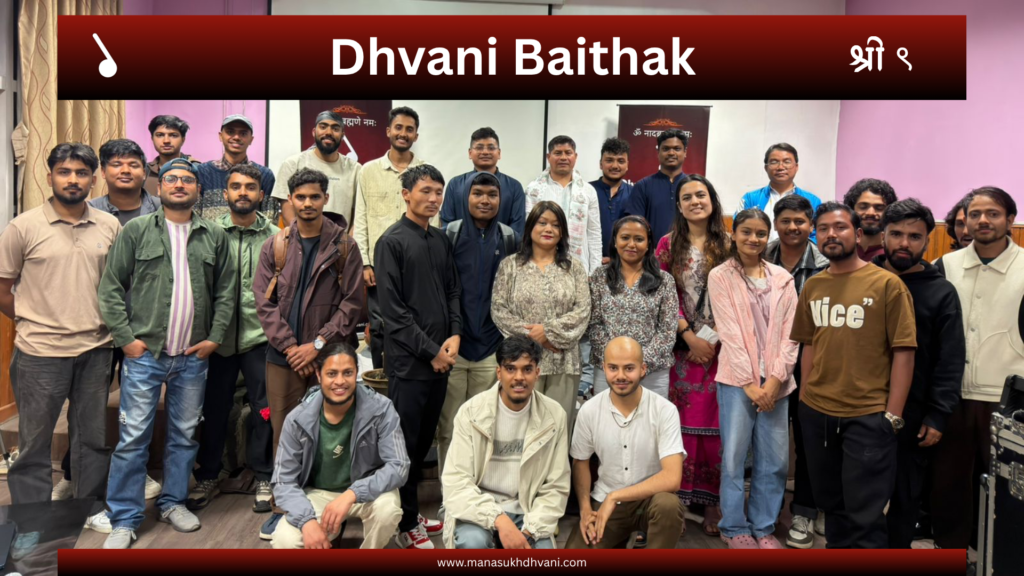
Why Kathmandu Is a Genuinely Good Place to Experience This
You might assume Indian classical music belongs only in India, but Kathmandu has a real, living connection to this tradition. Nepal’s Kathmandu Valley has been a spiritual and musical crossroads for centuries, sitting between Indian classical traditions and Tibetan Buddhist chant traditions, absorbing and preserving both.
The Kathmandu Valley is already one of the world’s most spiritually dense small regions: home to two UNESCO-listed stupas, the sacred Pashupatinath temple complex, and dozens of monasteries. Adding a Dhrupad session to your itinerary isn’t an odd detour, it’s a natural extension of exactly what already draws travelers here: the search for something that feels ancient, unhurried, and real.
What an Authentic Dhrupad Session Actually Feels Like
If you’ve never experienced Indian classical music up close, here’s what to actually expect, no jargon, no assumptions:
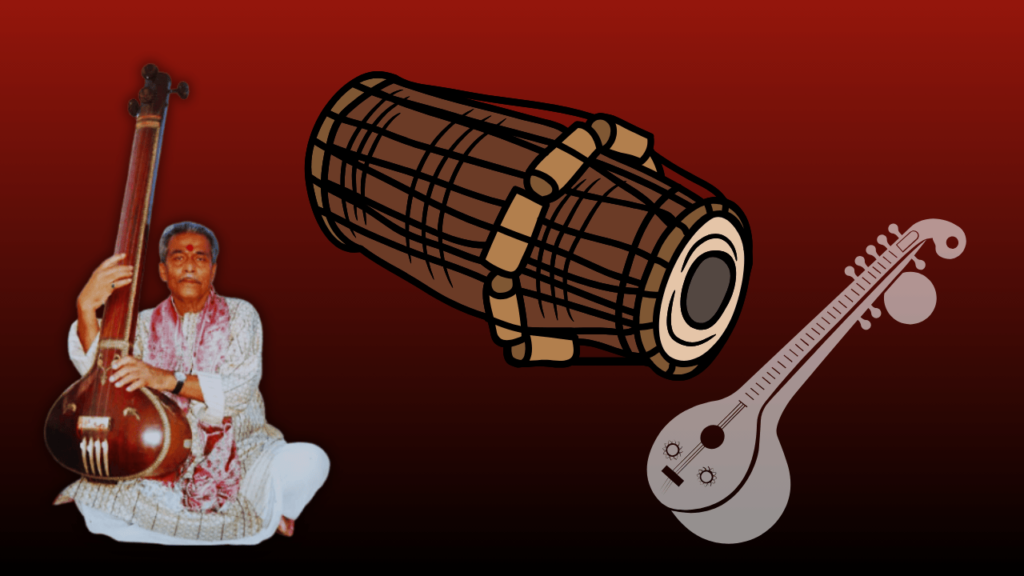
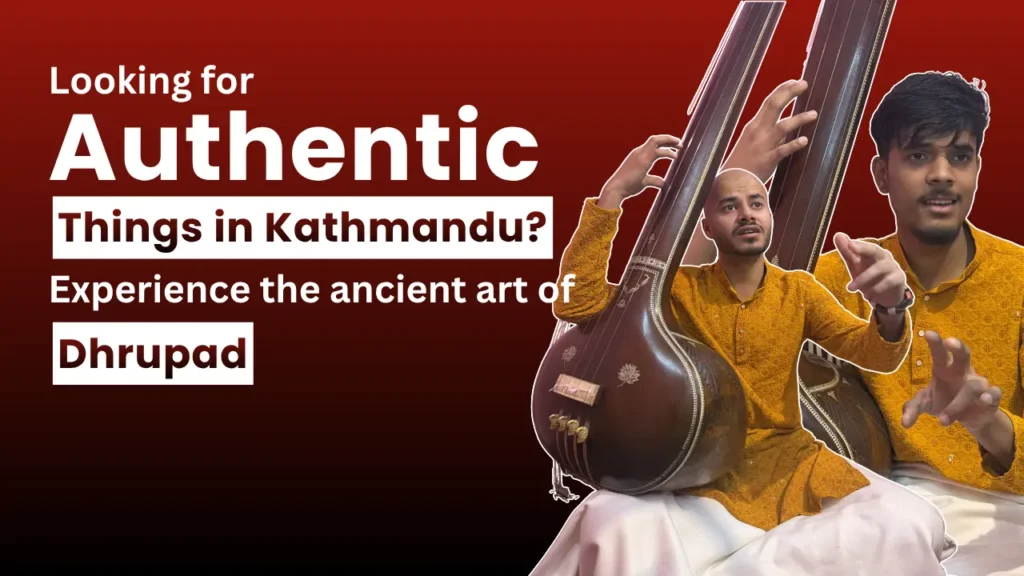
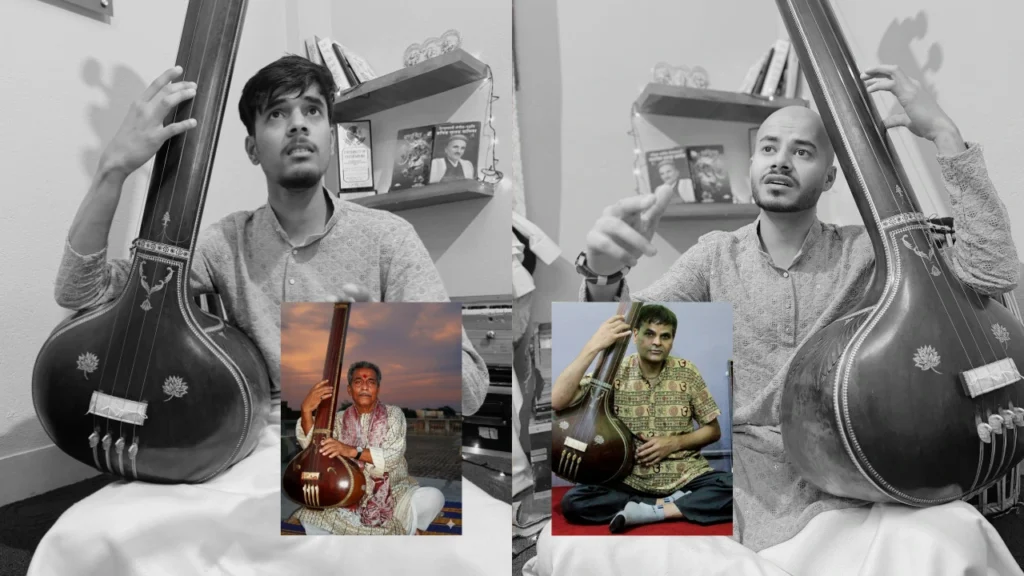
- You sit on the floor, usually on a cushion, close to the musician and the tanpura (a long-necked drone instrument that hums continuously in the background).
- The session opens with “alap”, a slow, wordless unfolding of the raga (melodic scale), sometimes lasting 15–20 minutes on its own. There’s no beat yet. Just pure, exploratory sound.
- A pakhawaj (a barrel-shaped drum) enters, and the rhythm slowly locks in, along with structured poetic verses, often in Sanskrit or Brij Bhasha.
- You don’t need to “understand” anything. Nobody expects you to know a raga from a scale. Your only job is to sit, breathe, and listen.
- It usually ends in silence, not applause. That silence is often the most memorable part.
A Quick Comparison: Typical Tourist Day vs. A Day With Dhrupad Woven In
| Typical Tourist Day | A Day With an Authentic Cultural Session | |
|---|---|---|
| Pace | Rushed, 5–6 stops | Slow, 1–2 meaningful stops |
| Interaction | Photos, brief guide commentary | Sitting close, direct human connection |
| Memory formed | Visual (photos) | Sensory and emotional (sound, stillness) |
| Souvenir | A photo, a trinket | A feeling, sometimes a new skill |
| Crowd | Large groups, tour buses | Small, intimate, often 1-on-1 |
Neither approach is “wrong.” Most travelers want both. But if your itinerary is currently 100% sightseeing and 0% sitting-still, this is worth carving out one afternoon for.
Where to Actually Experience This in Kathmandu
This is the part most travel blogs skip entirely, because most “cultural experience” articles are written by people who’ve never actually sat through one. In reality, authentic Dhrupad instruction in Nepal is rare. Very few teachers here trace back to a genuine Guru-Shishya (teacher-student) lineage rather than a casual weekend workshop.
If you’re staying anywhere near Patan or Lalitpur, which many culturally-minded travelers already prefer over noisy Thamel for its quieter, heritage-rich streets, you’re actually close to one of the few places in the country where this tradition is taught properly: a small, dedicated school called Manasukh Dhvani, based in Pulchowk, Lalitpur.
They’re not a tourist attraction built for quick photo-ops. It’s a genuine music school, teaching vocal, tabla, violin, and other Indian classical disciplines, including Dhrupad, in the traditional 1-on-1 format, both in person and online. For travelers, this means two real options:
- A single trial session, if you simply want to experience Dhrupad once during your trip, understand its meditative pull, and see what all this “sound as spiritual practice” talk is actually about.
- A short music retreat, if you’re the kind of traveler who prefers depth over checklist tourism, and would rather spend three or four mornings actually learning the basics of raga and rhythm than adding another temple photo to your camera roll.
Neither requires prior musical experience. Neither requires you to speak Nepali or Hindi. You just need to be curious enough to sit down and listen.
A Few Honest Tips Before You Go
- Don’t schedule it right after a big sightseeing day. Dhrupad rewards a calm nervous system. Go in the morning, or after a rest, not sandwiched between two temple visits.
- Wear comfortable clothes you can sit cross-legged in. You’ll likely be on a cushion, not a chair.
- Leave your phone in your bag. This is genuinely one of the only “attractions” in Kathmandu where the best souvenir is putting the camera away entirely.
- Go in with zero expectations of understanding the technicalities. You are not being tested. You’re simply invited to listen.
Frequently Asked Questions
Do I need any musical background to try Dhrupad in Kathmandu? No. Most first-time visitors have never studied music formally. Sessions for beginners and travelers are designed to be accessible, not academic.
How long does a typical session last? A single introductory session usually runs 45 minutes to an hour. Retreat-style programs can run a few days, with daily 1–2 hour sessions.
Is this suitable for someone on a short 3–4 day Kathmandu trip? Yes. A single session fits easily into even a short itinerary, ideally on a day with lighter sightseeing plans.
Is Dhrupad religious? Do I need to be Hindu to experience it? No. While it grew out of devotional and spiritual traditions, sessions today are open to travelers of any or no religious background. It’s approached as a meditative art form, not a religious requirement.
Where is this taught in Kathmandu? Pulchowk, Lalitpur, is home to Manasukh Dhvani, a registered music school offering Dhrupad, vocal, tabla, and other Indian classical instruction, both online and in person, for beginners and travelers alike.
The Real Souvenir
Every traveler comes home from Kathmandu with photos of stupas and temples, and that’s exactly as it should be. But if you want to come home with something a little rarer, a memory you can’t quite photograph, an hour of sound that briefly slowed your entire mind down in the middle of a busy trip, that’s worth setting aside an afternoon for.
If that sounds like the kind of experience you’re looking for, Manasukh Dhvani in Pulchowk, Lalitpur welcomes travelers for both single trial sessions and short music retreats. You can reach out at manasukhdhvani@gmail.com or learn more at manasukhdhvani.com to see what fits your trip.
Kathmandu already changes most people who visit it. Sometimes, it just takes the right hour of silence to notice.