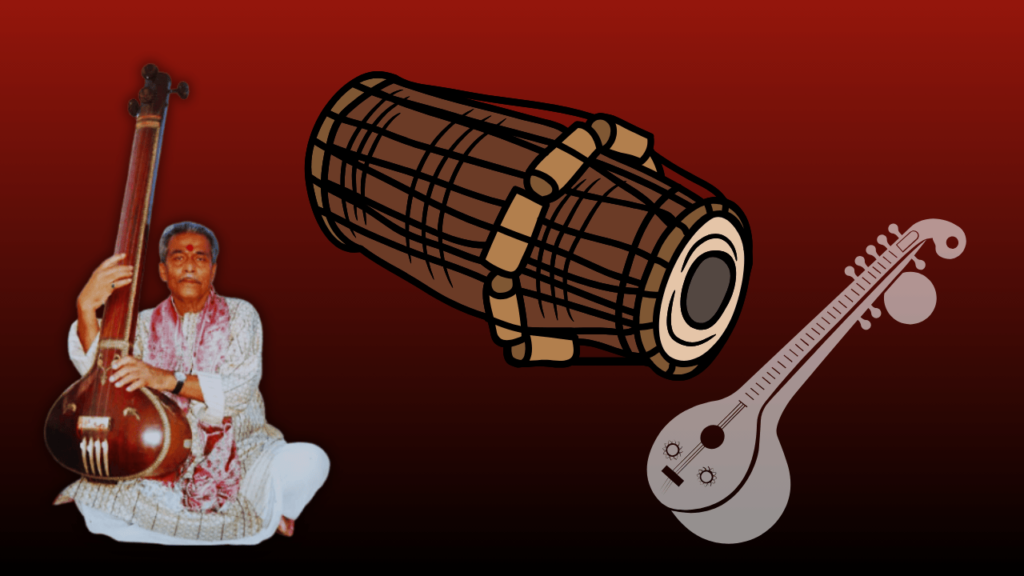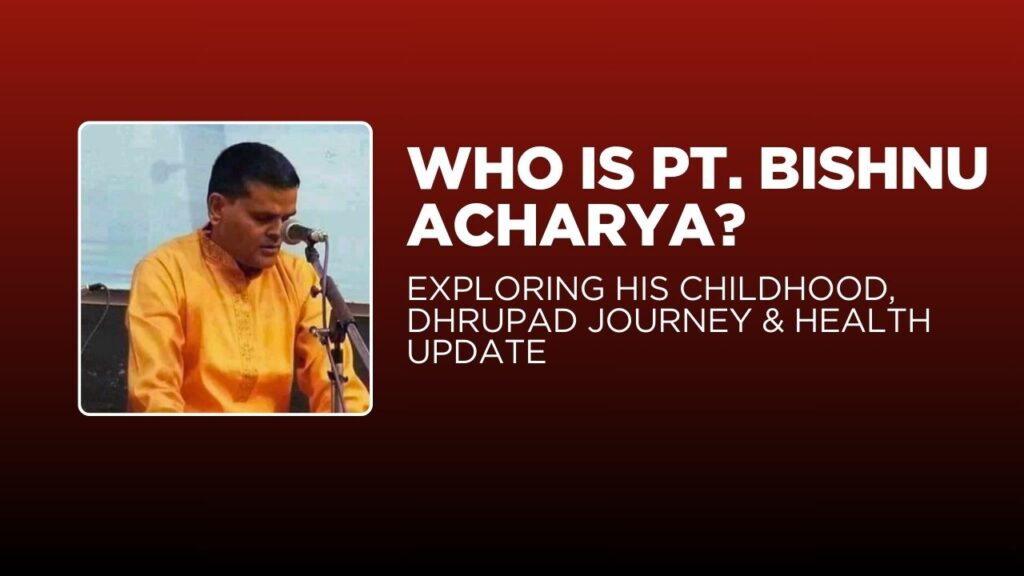
Pandit Bishnu Prasad Acharya is a highly respected Dhrupad vocalist known for his mastery in the Darbhanga Gharana tradition. As a dedicated practitioner and teacher, he has played a vital role in preserving and spreading Dhrupad, the most ancient form of Hindustani classical music. His music is deeply rooted in the spiritual and meditative essence of Dhrupad, and his performances are known for their precision, depth, and emotive power.
Through the learnings from guru late pt Vidhur malik he had gain his learnings of dhrupad from the lengend of the darbhanga gharana. Trained rigorously in the Khandahar Bani/Gauhar Bani of the Darbhanga Gharana, Pandit Acharya has brought Dhrupad to a wider audience, both in Nepal and internationally.
Pandit Bishnu Acharya – A Legendary Dhrupad Maestro
Pandit Bishnu Prasad Acharya is a distinguished figure in the world of Dhrupad, the oldest and most profound form of Hindustani classical music. Renowned for his deep knowledge and expertise in the Darbhanga Gharana tradition, he has dedicated his life to preserving, promoting, and teaching this ancient art form in Nepal and beyond.
As one of Nepal’s leading Dhrupad vocalists and educators, Pandit Acharya has played a crucial role in reviving interest in Eastern classical music, especially among younger generations. His music is deeply rooted in the meditative and spiritual essence of Dhrupad, blending technical precision with soulful expression.
Beyond his performances, Pandit Acharya is an esteemed guru, training students in the intricate techniques of Dhrupad singing, taal, and raag-based improvisation. Through his teaching, he has been instrumental in passing down this timeless tradition to a new generation of musicians, ensuring that the sacred legacy of Dhrupad continues to thrive.
His contributions to Eastern classical music in Nepal go beyond the stage—his efforts in education, mentorship, and cultural preservation have solidified his place as a torchbearer of Nepal’s classical music heritage.
He has been honoured with many prestigious awards like Tirunal puraskar(Dhrupad mela),Honoured by sangeet prasikshyan kendra , Pokhara Nepal,etc. He is recognised as the Guru in the Nepal who has given such a variety of tremendous dhrupad performances in nepal.In the touch of this sacred form of art called dhrupad now he has been doing for almost 35 years in the field of music in his carrer and continuing so.
In this journey he had given his performances in nepal, india as well as abroad.His recognition mainly comes with the contributer in dhrupad music. Learning from one of the traditional gharana of india Darbhanga Gharana, he has flowed his knowlege and teaching to various students who are learning in Nepal.

Birthplace, Family Background & academic
Pandit Bishnu Prasad Acharya was born on 1973/09/19 in the Arghakanchi, lumbini from his father Netra pd Acharya and Mother Indira Acharya.His musical journey gets not much influenced by the family. At the age of only 8 He went to Banaras with his grand mother who used to live there. As the environment of the Banaras is much more tilted toward the religious and cultural aspects, the environment there catches up and he also began to touch up with that environment and
His academic qualification rests on sanskrit particularly “ sanskriti literature” from very beginning, I started my study in sankrit in india ( Brindaban), under the kind guidence of renown scholars such as “ Baidhyanath Jha” ,Harisharan Upadhyaya, keshav sharan , kanaiya Jha. I have accomplished my graduation in sanskrit literature with sund rank. As sanskrit is foundation of study, he have strong command in sanskrit language, sanskrit byakaran and literature.
| Level | Board of university | Passed year | Division |
| 1. Prathama School Level Lower secondary | Sampurananda University | 1986 | 1st |
| 2. Purba Madhyama 1st & 2nd part (SLC) level | Sampurananda University | 1987-1988 | 1st |
| 3. Uttar Madhyama 1st & 2nd part (Certificate) level | Sampurananda University | 1992-1992 | 1st |
| 4. Shastri 1st,2nd,& 3rd year (Bachelors) | Sampurananda University | 1995-1997 | 1st |
Introduction to Music: The Beginning of a Dhrupad JourNey
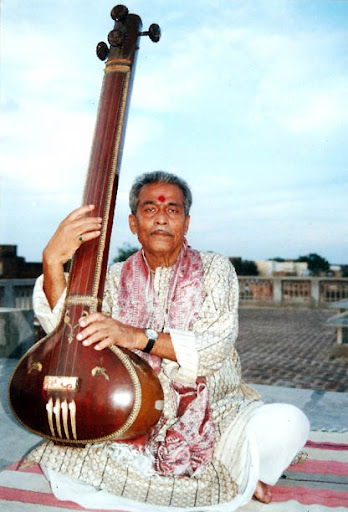
Throgh the learning from Guru Shishya parampara his dhrupad journey starts from the guru shishya parampara with one of the legend of dhrupad music late pt Bidhur mallik.
The way , Tradition ,It is taught
It is the ancient tradition in which one needs to stay with his /her guru for a long period of time. So following this tradition , I had a massive and dense atidy of Dhrupad and Dhamaar with late pt Bidhur malik ( one of the most renown classical vocal dhrupad expert of india ) for 20 years under the India’s reputed gharana of music, Darbhanga music gharana. Later on he studied more about Dhrupad and Dhamar from shree chaitanya prem sansthan for 5 more years . So he have spent 25 years of my life for the study of Dhrupad and Dhamaar.
From childhood music was his passion, so to quench the thirst of music study, I joined Bhatkhande sangeet Bidhyapith, lukhnaw and Mahatma ghandhi kashi bidhyapith ( U.P state university of banarasi)
I have accomplished the study of music in first division.
| Level | Board of University | Passed Year | Division |
| 1. Prathama (SLC) | Bhatkhande Bidhyapith | 1999 | 1st |
| 2. Madhayama 1st & 2nd (Certificate level) | Bhatkhande Bidhyapith | 2000,2001 | 1st |
| 3. Bisharad 1st & 2nd (Bachelors) | Bhatkhande Bidhyapith | 2002,2003 | 1st |
| 4. M. Muse (Master) | Mahatma Gandhi Kashi Bidhyapith | 2008,2009 | 1st |
The Journey into Dhrupad: Mastering the Oldest Form of Hindustani Classical Music
What is Dhrupad? Understanding the Ancient Art Form
Dhrupad is the oldest surviving form of Hindustani classical music, deeply rooted in spirituality and meditative depth. Originating from the Sama Vedic chants, Dhrupad evolved as a sacred musical tradition, flourishing in India’s royal courts and temples. It emphasizes purity of swara (notes), intricate rhythmic structures, and profound emotional depth.
Historically, Dhrupad was patronized by Mughal emperors, with legendary figures like Tansen elevating its status. Over centuries, it developed into distinct gharanas (schools), including the Darbhanga, Dagar, and Betiya traditions. Among these, the Darbhanga Gharana is renowned for its powerful and rhythmic approach, making it a significant force in Dhrupad’s evolution.
Unlike modern classical music styles, Dhrupad is performed in a slow, expansive alap, followed by a structured composition set in fixed taal cycles. It is traditionally accompanied by the Pakhawaj, a barrel-shaped drum that enhances its dynamic rhythmic structure.
Today, Dhrupad continues to captivate audiences worldwide, offering a deeply immersive and meditative musical experience. Its influence extends beyond classical concerts, finding a place in yoga, sound therapy, and spiritual practices.
Dhrupad and Khayal are two distinct forms of Hindustani classical music, differing in history, structure, and presentation. Dhrupad, the oldest surviving genre, traces its roots to Vedic chants and temple traditions, later flourishing in royal courts. It is deeply meditative, emphasizing slow, sustained notes, and a structured rhythmic cycle, typically accompanied by the Pakhawaj. In contrast, Khayal, which emerged around the 13th-15th century under Persian and Sufi influences, is more flexible and expressive, allowing for intricate ornamentations and faster improvisations, often accompanied by the Tabla.
While Dhrupad compositions are devotional and philosophical, Khayal explores a broader range of emotions, including themes of love and daily life. Dhrupad is upheld by four major gharanas—Dagar, Darbhanga, Betiya, and Talwandi—whereas Khayal has multiple gharanas like Gwalior, Kirana, and Patiala, each with distinct styles.
Contributions to Dhrupad: His Unique Style and Innovations
Pandit Bishnu Acharya is a revered figure in the world of Dhrupad, known for his mastery of the ancient tradition and his dedication to its preservation and evolution. Trained in the Darbhanga gharana, he has played a crucial role in keeping the rich heritage of Dhrupad alive while making it accessible to modern audiences. His unique style blends the depth of Khandaar Bani with intricate layakari (rhythmic play), bringing both meditative depth and dynamic energy to his renditions.
With a deep understanding of rāga and tala, he has introduced innovative approaches in teaching, making Dhrupad more approachable for new generations. Through his performances, workshops, and disciples, he continues to spread the essence of Dhrupad beyond traditional boundaries, fostering a growing appreciation for this ancient musical form.
He had also composed many dhrupad bandishes with the essence of purity. He had also performed in various places.His Nepali bandishes on various taal are profounding and through his bandishes many student are easily able to understand and implement the gayaki. Though dhrupad is regarded as the tough art in classical music.
He had made it simple in the student mind so that they easily can understood that level of teaching and gayaki. He had teached dhrupad in the lalitkala campus (Tribhuwan University) in Nepal. Student also give responses to his contribution in dhrupad in Nepalese classical music society.
The trend of dhrupad is now increasing in context of Nepal which is one of the major contribution of Pandit BIshnu Prasad Acharya. He had mainly contributed in producing the studenyts of dhrupad so that they can flow the art of dhrupad both nationally and internationally. Right now Manasukh Dhvani had came up with the idea of the elaboration of the art form of dhrupad to all the public minds under the involvement of guru Bishnu Pd Acharya.
PERFORance of dhrupas & dhamaar
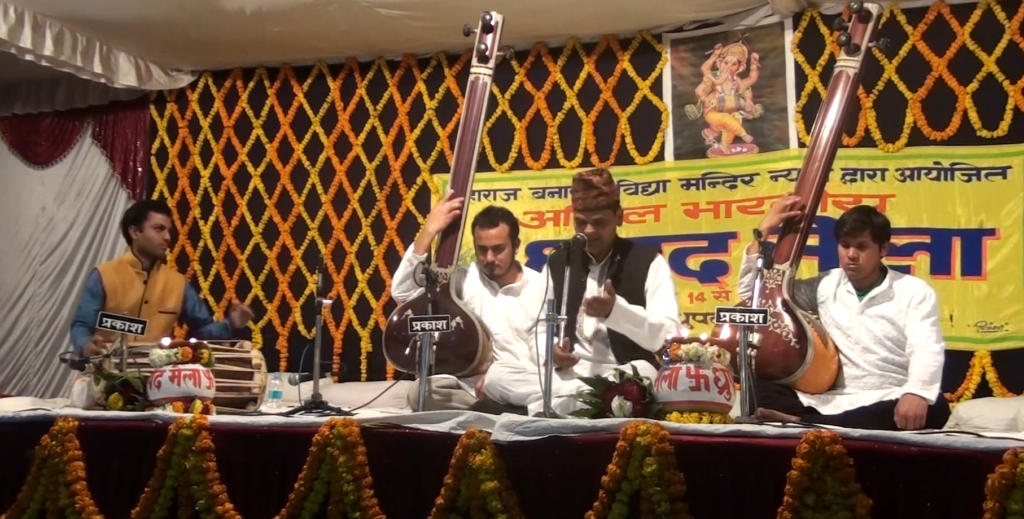
Performances In India
- Swami haridas ahirvaw mahostaw : 2 sept 1996 brindavan
- Tulsidas jayanti : 2 sept 1998 chitrakut U.P
- Mata Annapurna mahotsaw : 2008 l, Agartala
- Swami bhagwandas Mridangacharya Dhrupad smirti : 11 jan 2003 Gorakhpur
- Pad Gaayan Dhrupad Mahotsav -2003
- Shuva E banaras
- Akhil bharatiya Dhrupad mela : tulsighat varanasi ( every year since 2015 )

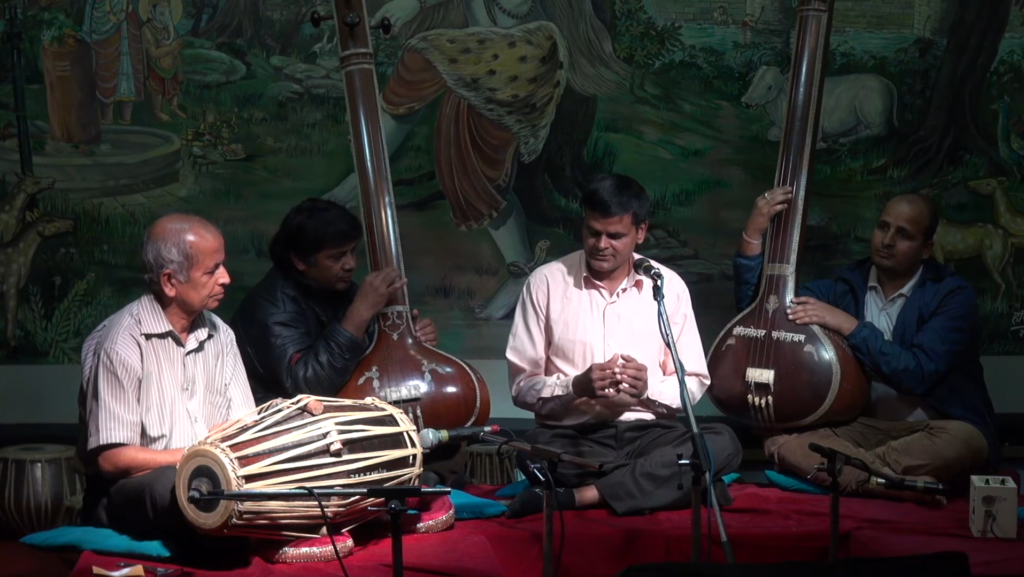
Performances In Nepal
- Kirateshwor sangit aaahram
- Ram mandir classical program
- Samata sangitik program
- Yalamaya classical program
- Nepal Classical music society
- Shrawani sastriya sangit mahotsav 2011. kathmandu
- Shrawani Mela Jhulan Mahotsav 2011, Janakpur
- Sastriya Sangit utsav
- Atul gurukul
- Krishna Pd Bhattarai Aashram
- Hrikshyasheela sangit
- Kapan Sangit Sarowar

Performance in Germany
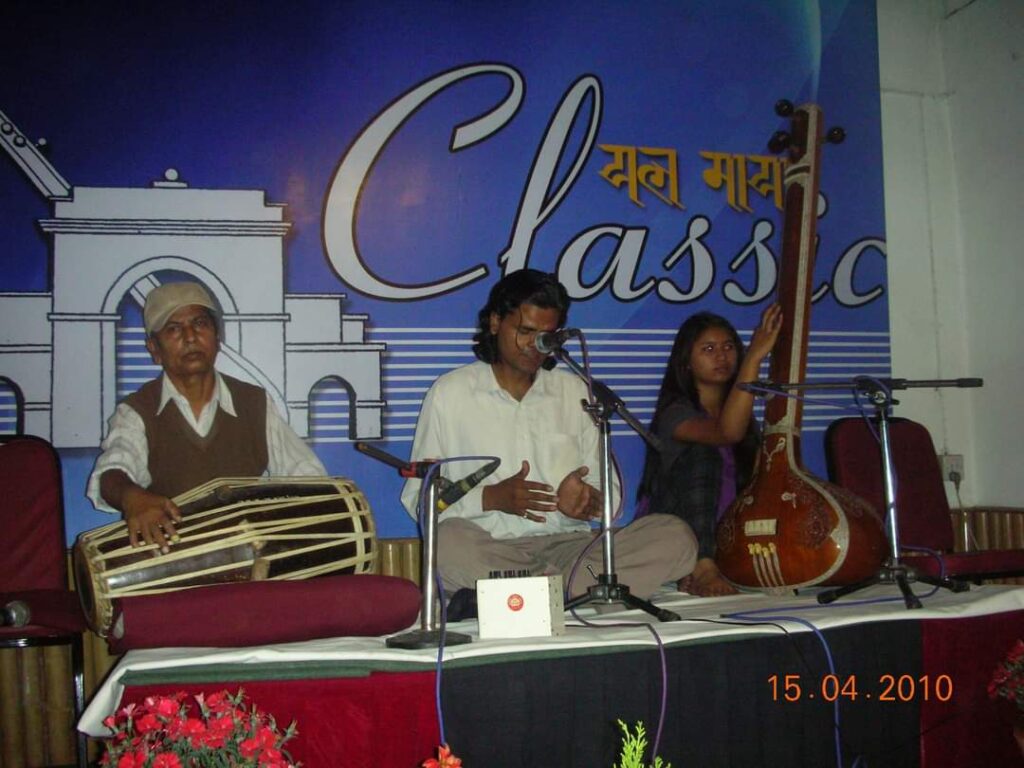
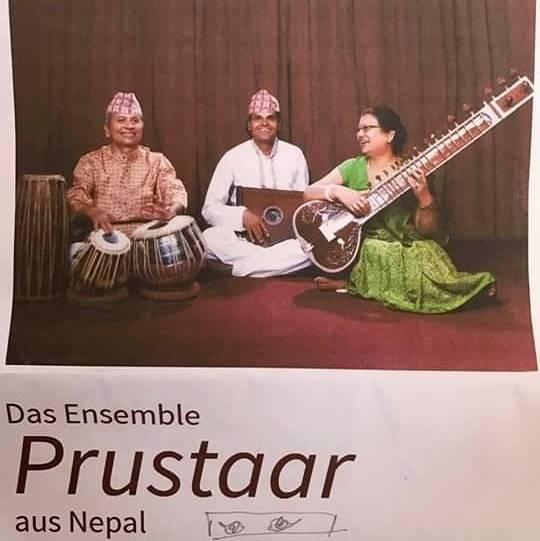
He had also given His performance abroad in Germany at 2014 in various states in the one month trip with hom nath upadhaya.
Awards
- Minister human resources development of culture , Government of india
- Scholarship for music study for 2 years by government of indial
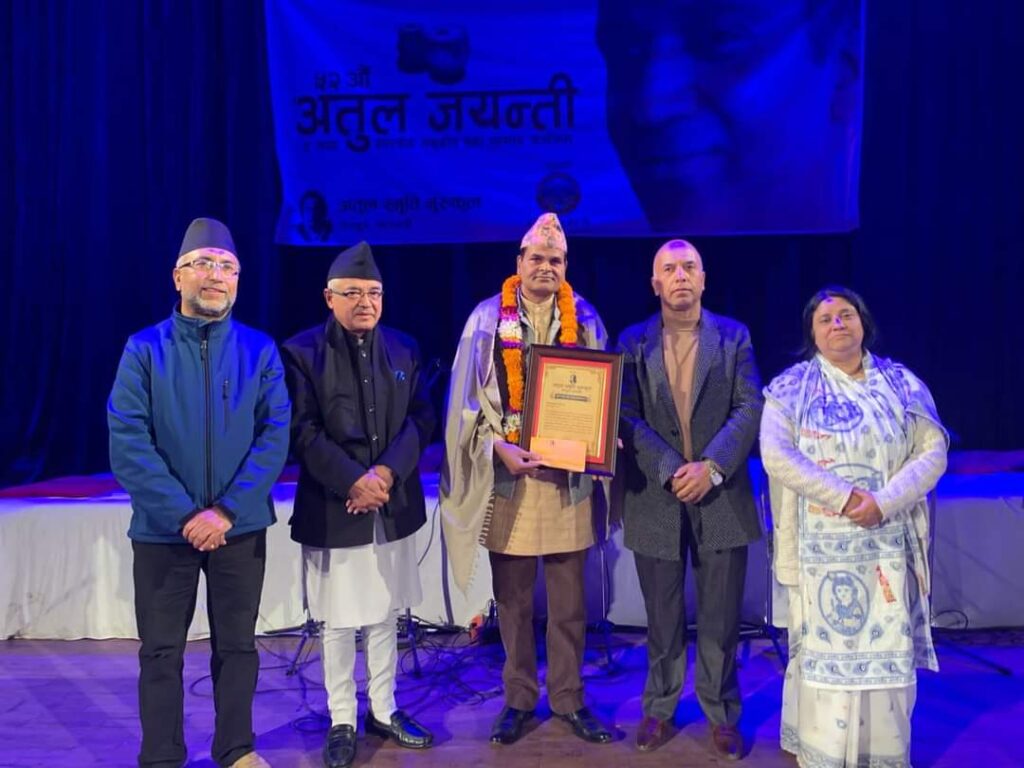
- Honoured by sangeet prasikshyan kendra , Pokhara Nepal
- Tirunal puraskar at Dhrupad mela , Vanaras
- Atul Smriti samman
- Hrichyashila Samman
Legacy and Influence: Pandit Bishnu Acharya’s Impact on Nepali Classical Music
How He Has Inspired the Next Generation
Pandit Bishnu Acharya has left a profound mark on Nepal’s classical music landscape, shaping the future of Dhrupad through his dedication to teaching, performing, and preserving this ancient art form. As a master of the Darbhanga gharana, he has not only upheld the traditional discipline of Dhrupad but has also inspired a new generation of musicians to explore and embrace its depth. Through his mentorship, many students and disciples have taken forward his teachings, ensuring that the legacy of Dhrupad continues to flourish in Nepal and beyond.
Through his unwavering dedication, Pandit Bishnu Acharya has nurtured a new generation of Dhrupad practitioners, ensuring that this ancient tradition does not fade away. His work with Manasukh Dhvani has been inspirational in providing structured Dhrupad education, both online and in-person, making it accessible to students from diverse backgrounds. His performances, workshops, and mentorship have inspired young musicians to embrace Dhrupad, fostering a renewed interest in Nepal and beyond.
His contributions to Manasukh Dhvani have been instrumental in promoting classical music education, making Dhrupad accessible to young learners through both physical and online classes. By bridging the gap between tradition and modernity, Pandit Bishnu Acharya has solidified his place as a key figure in Nepal’s classical music scene, leaving behind an enduring influence that continues to inspire musicians and audiences alike.
With his contributions, Dhrupad is no longer confined to a niche audience but is gaining recognition as a vital part of Nepal’s rich cultural heritage. As more students take up the art under his guidance, Pandit Bishnu Acharya’s legacy continues to shape the future of Dhrupad in Nepal, ensuring that this profound and meditative musical tradition remains alive for generations to come.
The Future of Dhrupad in Nepal
Dhrupad, the oldest form of Hindustani classical music, is experiencing a revival in Nepal, with growing interest among young musicians and audiences. Efforts to keep this ancient art form alive are being led by dedicated artists and institutions that recognize its cultural and musical significance. Among them, Manasukh Dhvani has played a crucial role in preserving and promoting Dhrupad through education, performances, and workshops, making it accessible to both traditional and modern learners.
The future of dhrupad seems increasing in the nepal. The platform set by the Pandit Bishnu Acharya has now made easier for the next generation to carry out the art of dhrupad and elaborate it nationally and internationally. The performances of Bishnu Acharya in One of the most prestigious program Dhrupad Mela has now enhanced many young generation to follow the path of dhrupad which is also connected to the spiritual kinds and is the sacred way of singing which requires a lot of practises with the guru.
One of the most influential figures in this movement is Pandit Bishnu Prasad Acharya, who has tirelessly worked to sustain and expand the reach of Dhrupad in Nepal. His expertise in the Darbhanga gharana, combined with his innovative teaching methods, has inspired a new generation of students to embrace this deeply meditative and spiritual form of music. Through his contributions, Dhrupad is not only surviving but thriving, ensuring that Nepal continues to be a significant part of the global classical music landscape. With continued dedication from artists, institutions, and enthusiasts, the future of Dhrupad in Nepal looks promising, bridging the gap between tradition and modern appreciation.
Conclusion: Honoring the Life and Art of Pandit Bishnu Acharya
Pandit Bishnu Prasad Acharya has been a pioneer in preserving and promoting Dhrupad in Nepal, bridging the gap between ancient tradition and modern audiences. As a devoted exponent of the Darbhanga Gharana, he has upheld the purity of Dhrupad’s meditative and spiritual essence while nurturing a new wave of classical musicians through Manasukh Dhvani. His deep knowledge, soulful renditions, and dedication to music education have solidified his place as a leading figure in Nepal’s classical music landscape.
Beyond his performances, Pandit Bishnu Acharya has played a key role in revitalizing Dhrupad in Nepal, ensuring its continuity through rigorous training of students and disciples. His innovative approach, commitment to tradition, and unwavering passion have made him a guiding force for aspiring musicians.
As we reflect on his remarkable contributions to Indian classical music, it is vital to continue supporting and appreciating Dhrupad and Hindustani classical traditions. Whether through live performances, online classes, or institutional support, every effort counts in keeping this ancient art form alive. Pandit Bishnu Acharya’s legacy lives on in the voices of his students, the institutions he has influenced, and the growing global interest in Dhrupad music. His impact will continue to inspire generations, making him a true beacon of Nepal’s rich classical heritage.